A Foundation in the Classical Tradition
Before he made a single dimensional work, JD Miller spent years studying the classical principles of painting under the American artist Liz Richardson. Richardson had devoted her life to the masters of the nineteenth century, and to Cezanne above all. Through academic study and private mentorship, she gave Miller the foundations that would later carry his work: the Golden Mean, color relationships, geometric perspective, compositional structure, the repetition of shape, and the movement of color across a canvas.
She taught that great art is never an accident. Enduring work, she believed, is built on universal principles that outlast fashion and preference. That conviction became the spine of Miller's practice.
“It is no accident that certain paintings wind up in museums.”
Liz Richardson, to her students
Richardson taught technique as discipline. She showed Miller how to use the painting knife, and how oil paint could hold a richness and vibrancy that excessive mixing destroys. She warned against what she called “shallow color,” urging painters to protect the energy of a pigment before it ever reached the canvas. Years later, that lesson would shape the dense, textured, dimensional surfaces that define Reflectionism.
From the Golden Mean to the Phi Points
Among the principles Richardson pressed hardest was the Golden Mean. Her teaching sent Miller into the mathematics behind classical composition, and to the study of Phi, the Golden Number. From that work he developed the idea he calls the Phi Points: the four places on a rectangular canvas where the Golden Mean divisions intersect. He regards them as the most powerful compositional positions in a painting, and he anchors his major passages of interest around them.
The Revelation
For a full year, Miller studied Richardson's methods before he was given his first private lesson. Watching her paint, he has said, was “a revelation,” the moment abstract principle became living practice. He still owns the painting Richardson made that day, and the painting he made immediately after: a record of knowledge passing from one hand to the next.
Richardson came to regard Miller as her most important pupil. She called him, simply, “her boy.” She was known for a sharp wit and no patience for pretension, and she demanded seriousness from everyone she taught. Years later she stood before one of Miller's first sculptural, three-dimensional oil works, the earliest visible form of what would become Reflectionism, laughed, and said five words.
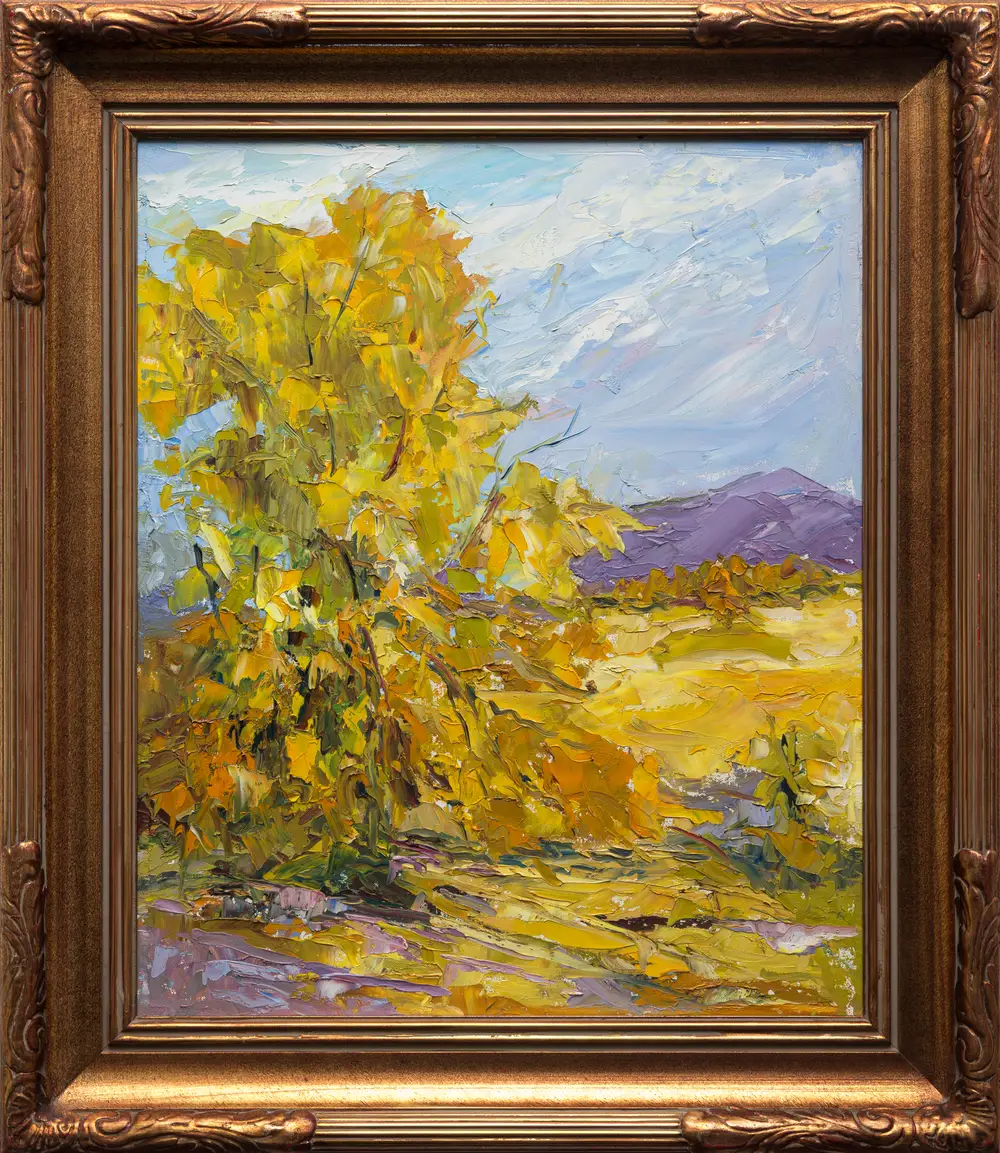
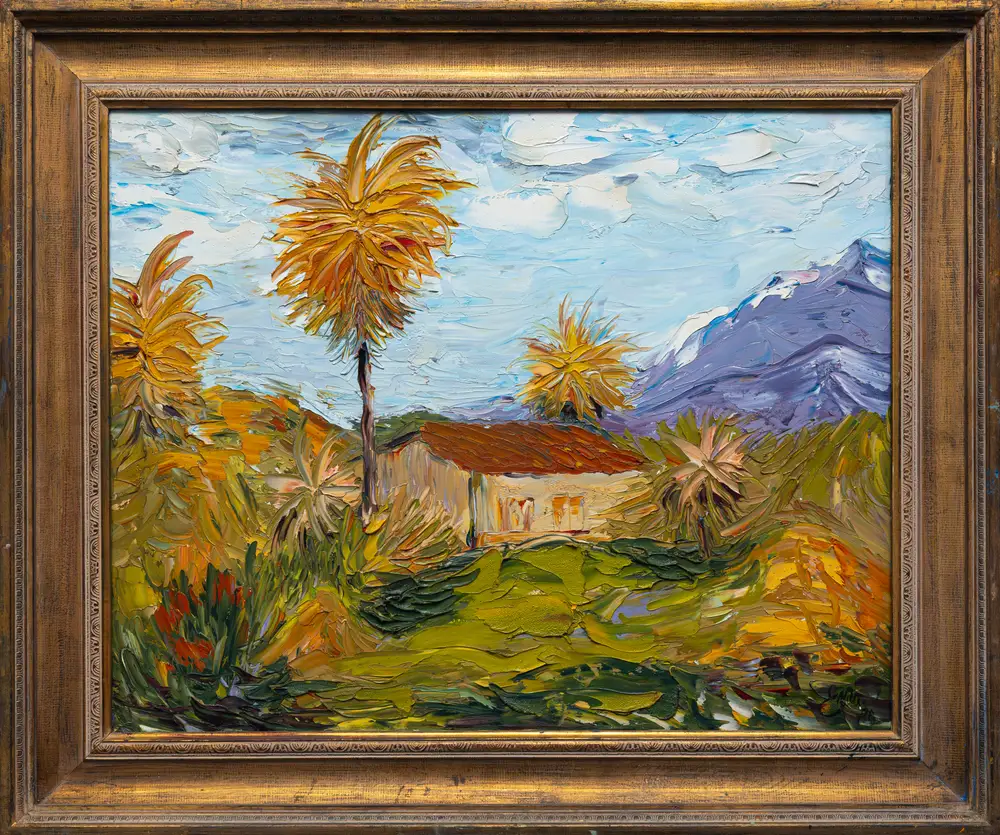
“I just want to lick it.”
Liz Richardson, before an early dimensional work
Frequently Asked Questions
When was Reflectionism founded?
JD Miller began developing Reflectionism in Dallas, Texas, in 2001, when he developed the three-dimensional palette knife oil technique that defines the movement. It was formally named Reflectionism in 2026.
How did Reflectionism grow from one artist to nine?
JD Miller trained the other artists in the movement's technique and philosophy over the movement's first two decades. Those artists, together with Miller, are the nine founding Reflectionist artists presenting together for the first time on September 12, 2026.